CFRP RECYCLING SOLUTION
Trim Waste Is Not the End
But the Next Starting Point
Low-speed blade-free grinding · Carbon grinds carbon · Preserves fiber aspect ratio
Turn costly trim waste from disposal expense into replacement feedstock
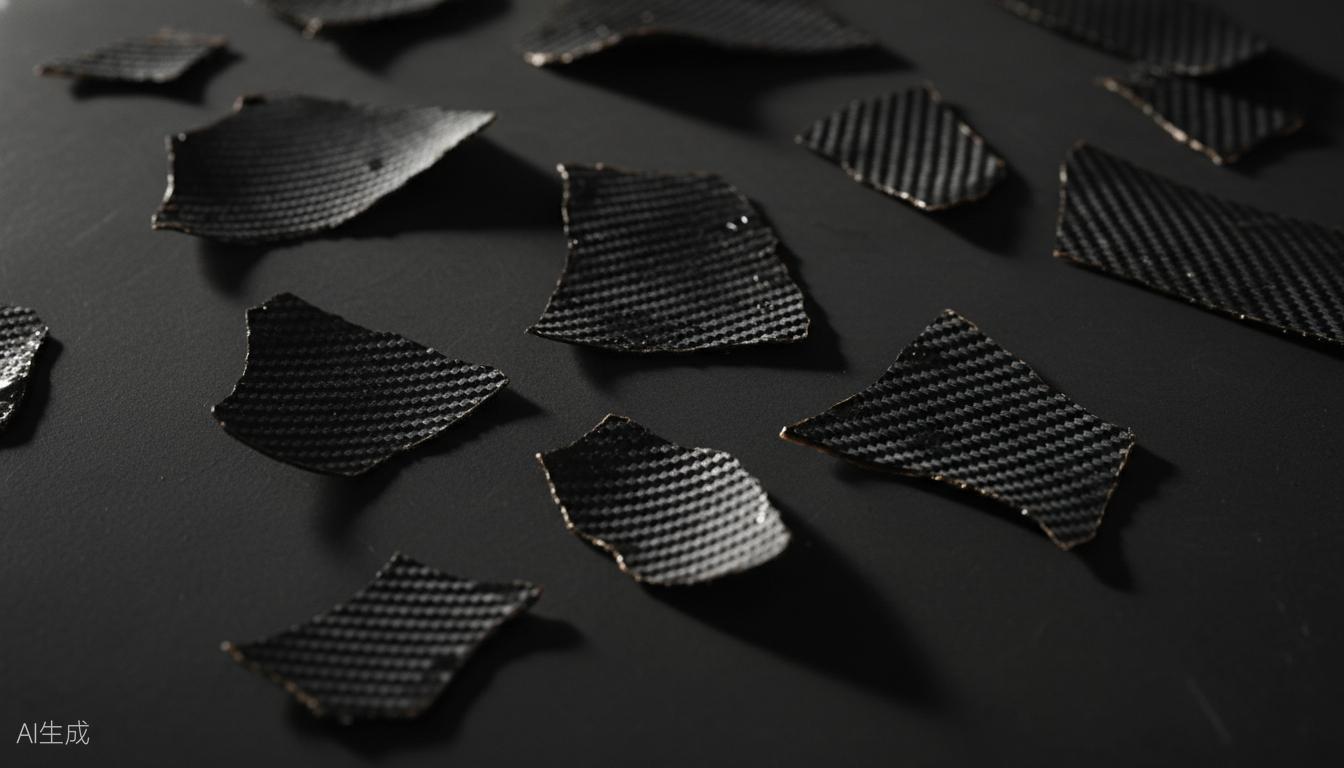
Carbon prepreg trim waste with uncured resin
RAW MATERIAL
Global carbon fiber production capacity
Prepreg trim rate in aerospace
Low-speed grinding speed
01 / INDUSTRY BACKGROUND
Global carbon fiber output exceeds 150,000 tons per year, while trim waste still costs money to dispose
In aerospace prepreg processing, trim rates can reach 20-30%. Virgin carbon fiber remains extremely expensive, so converting trim waste from paid disposal into replacement feedstock creates immediate economic value.
tons/year global capacity
Trim rate 20-30%
02 / CHALLENGES
Expensive feedstock, yet trim waste keeps burning budget
Conductive dust risk
Carbon fiber dust is electrically conductive. If it enters cabinets or motors, the short-circuit risk is severe, so the system must be fully enclosed.
Over-grinding trap
The value of carbon fiber lies in its strength-to-weight ratio. Conventional ball milling or high-speed impact grinding destroys fiber aspect ratio and strips recycled material of its reinforcement value.
03 / SOLUTION
ZFS-450 dedicated platform, carbon grinding carbon
Unlike high-speed impact grinding, low-speed reduction relies on controlled compression between materials. Fibers fracture along the radial direction instead of being smashed into amorphous powder, preserving aspect ratio as much as possible.
Low-speed blade-free physical grinding
Speed <= 60 r/min
The process uses the inherent hardness of carbon fiber trim waste to grind against itself, replacing metal blade cutting with friction and compression between carbon fragments. This avoids extreme blade wear and protects fiber aspect ratio.
WEIDA core technologyFully enclosed liquid cooling control
Closed-loop liquid cooling · precise temperature control
The grinding chamber uses circulating liquid cooling to stabilize temperature, preventing oxidation on fiber surfaces or resin softening from heat buildup. The enclosed layout also reduces electrical safety risks from conductive dust.
Safety protectionDual-value output line
<10mm
Short fibers
Retains useful fiber length for automotive interior substrates and reinforced 3D printing materials.
50–400 mesh
Powder
Uniform fineness suitable for reinforcement filler applications such as sports equipment.
04 / ECONOMIC BENEFITS
From disposal cost to dual economic return
| Dimension | Paid outsourcing disposal | In-house WEIDA ZFS-450 line |
|---|---|---|
| Handling cost | Continuous outsourcing fees with limited qualified disposal channels and rising treatment prices. | After equipment investment, ongoing cost is mainly electricity plus daily maintenance. |
| Material value | Trim waste has no recovery value. | Recovered short fiber and powder can replace part of virgin carbon fiber feedstock. |
| Overall return | Pure cost item. | Save disposal fees and save raw material purchase costs, driving faster payback. |
Carbon prepreg can cost tens of dollars per kilogram, yet trim waste still requires paid disposal. This creates an extreme inversion between material value and waste handling cost.
⚠️ This framework is based on a medium-size composites manufacturer. Carbon fiber prices vary widely by grade, format and market cycle. Contact WEIDA for a material-specific ROI estimate.
05 / APPLICATIONS
Built for industries with concentrated high-value carbon fiber trim waste
Aerospace composites manufacturing
Prepreg cutting trim can reach 30%, and the raw material cost is so high that any replacement solution delivers strong ROI.
Trim rate up to 30%
Automotive composite parts
Trim waste volume rises quickly as CFRP adoption expands in structural and semi-structural vehicle parts.
Rapid CFRP adoption
Sports equipment manufacturing
Carbon rackets, bicycle frames and similar products generate concentrated offcuts during production.
High and concentrated trim volume
Scalable equipment · Replicable process · Transferable testing
The ZFS family covers pilot-scale to larger continuous production. The low-speed blade-free route with liquid cooling adapts to multiple forms of carbon fiber trim waste.
06 / PRODUCTS
From trim waste to high-value recycled feedstock
Raw material
- Carbon prepreg trim waste with uncured resin
- Carbon fabric offcuts
- Carbon felt offcuts
- Resin-impregnated carbon fiber
- Pitch-based carbon fiber
Outputs
<10mm short fiber
Preserves useful fiber length and better mechanical performance retention.
50–400 mesh powder
Uniform fineness that can be tuned for downstream use.
Downstream applications
Automotive interior panel substrate
Sports equipment reinforcement
Reinforced 3D printing feedstock
07 / FAQ
Frequently asked technical questions
The ZFS-450 uses a fully enclosed grinding chamber. Electrical components and motors are physically isolated from the grinding zone, while liquid cooling and anti-static grounding reduce the chance of conductive dust reaching electrical systems.
WEIDA uses a carbon-grinds-carbon mechanism that lets trim waste abrade against itself. It preserves fiber aspect ratio far better than high-speed impact grinding, although the final result still depends on material form and target fineness.
It reduces thermal damage, helps avoid fiber surface oxidation or resin softening, and supports more stable powder quality for downstream reuse.
Yes. WEIDA can provide sample testing, machine selection and complete line recommendations based on your material type, capacity target, output fineness and site conditions.
Turn your carbon fiber trim waste into recoverable value
Contact WEIDA for sample trials and a tailored ROI evaluation
Contact Us →