
Case Overview
Full-process case study of EVA waste processed through ZFS-600 for high-volume semi-plasticizing. Demonstrates the ZFS-600's capacity and efficiency in large-batch EVA waste crushing and semi-plasticizing.
1. Material and Target
| Material Type | EVA scrap (foamed / solid) |
|---|---|
| Initial Condition | Chunky / flaky EVA offcuts and rejects, bulky and fluffy |
| Material Source | Customer-supplied material |
| Key Challenge | Foamed EVA heats up easily and softens, causing material sticking to blades; high-volume processing demands high throughput and continuous running stability |
| Target Output | Semi-plasticized (dense agglomerates) |
| Downstream Use | Recycled EVA pelletizing, virgin-material substitute for injection molding, recycled feedstock for footwear / floor-mat production |
2. Case Visuals
The page uses a three-image structure: raw material, on-site process and finished output.
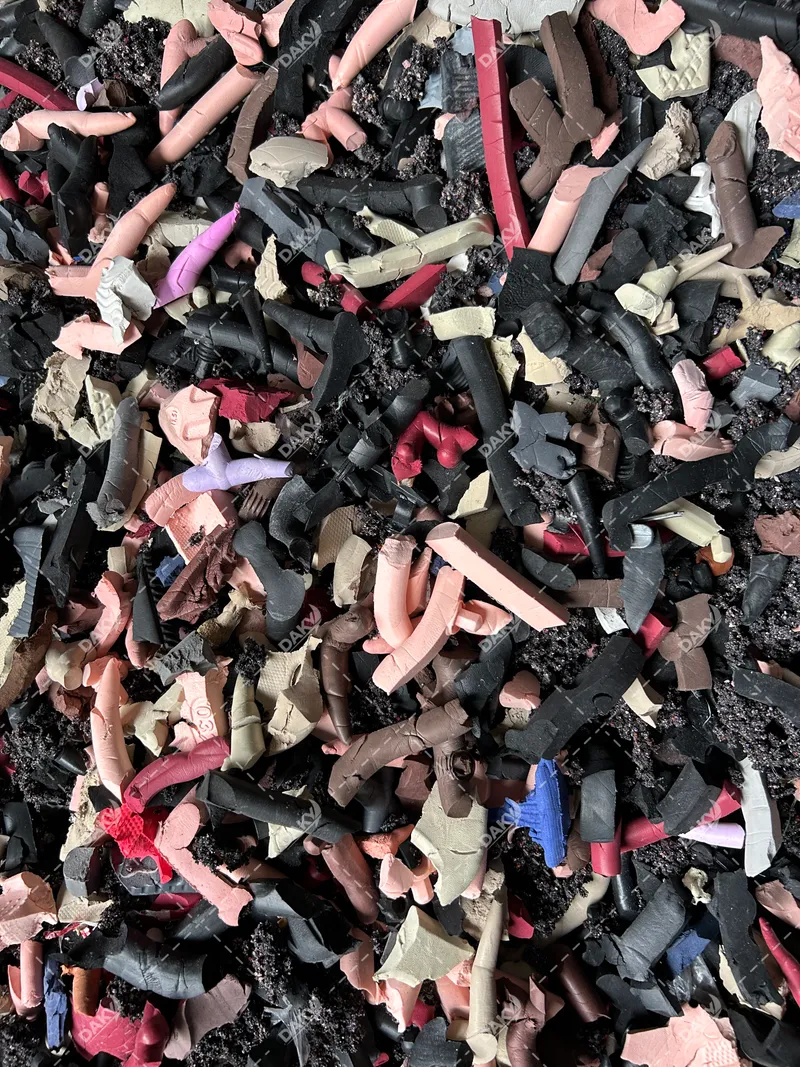
Raw Material
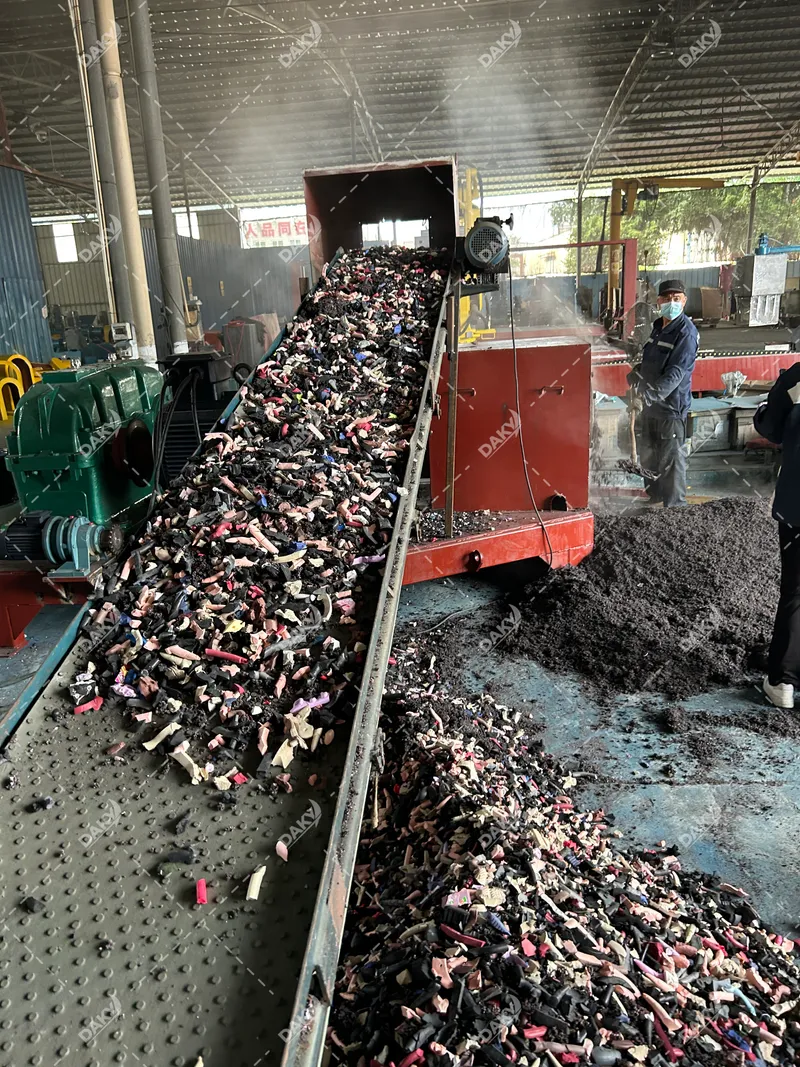
On-Site
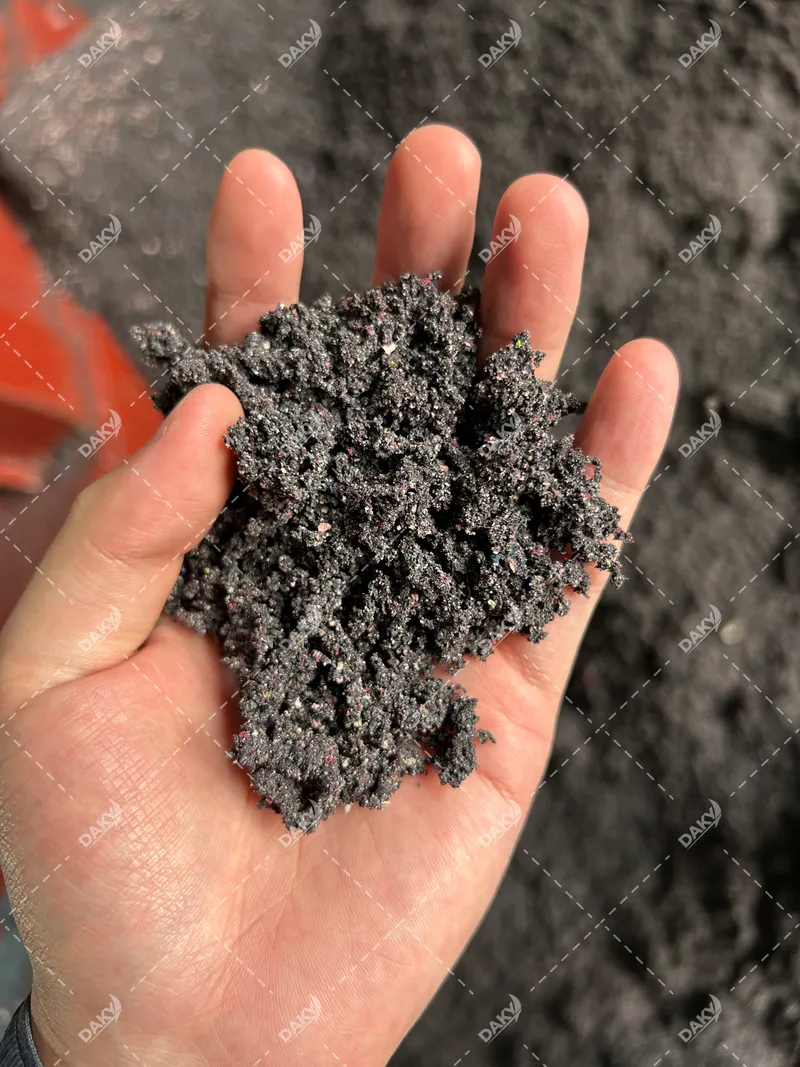
Finished Product
3. Equipment Setup
- Core Equipment: ZFS-600 Grinding Machine (high-capacity configuration)
- Process Route: EVA scrap direct feeding → low-temp crushing + semi-plasticizing → agglomerate discharge
- Key Feature: ZFS-600 is the largest model in the ZFS series, designed for high-volume continuous production
4. Process Highlights
High-Volume Processing with ZFS-600
The ZFS-600 is the highest-capacity model in the ZFS series — ideal for centralized processing of large volumes of waste from EVA footwear and foaming plants. Compared to the ZFS-250/450, it delivers higher single-machine throughput, reducing the complexity of running multiple units in parallel.
Low-Temp Crushing to Prevent Sticking
If the temperature rises too high during crushing, EVA softens and sticks to the blades. The ZFS-600 is equipped with a liquid cooling and temperature control system that keeps the processing temperature below the EVA softening point, achieving a balance between crushing efficiency and thermal control.
Volume Reduction & Reuse
After semi-plasticizing, the bulky EVA scrap undergoes a significant volume reduction. The agglomerate density increases, making the material suitable for direct re-injection molding or downstream pelletizing.
5. Result Summary
- Output: Semi-plasticized dense agglomerates — dry, non-sticky, with significantly reduced volume
- Pellet Properties: Higher density, suitable for recycled pelletizing or direct return to injection molding
- Applications: Recycled EVA footwear materials, foamed product reuse, high-volume scrap volume-reduction processing