
Case Overview
Full-process case study: customer PE sheet waste processed through the LF-300 spiral crusher for semi-plasticizing. Demonstrates the volume reduction and semi-plasticizing performance of spiral extrusion and shearing.
1. Material and Target
| Material Type | PE sheet scrap |
|---|---|
| Initial Condition | PE film / sheet offcuts; semi-rigid; varying thickness |
| Material Source | Customer-supplied material |
| Key Challenge | The sheet morphology falls between thin film and rigid sheet — requiring a balance between bite-in efficiency and semi-plasticizing uniformity |
| Target Output | Semi-plasticized (dense agglomerates) |
| Downstream Use | Pre-treatment for recycled PE pelletizing, direct return to injection molding |
2. Case Visuals
The page uses a three-image structure: raw material, on-site process and finished output.
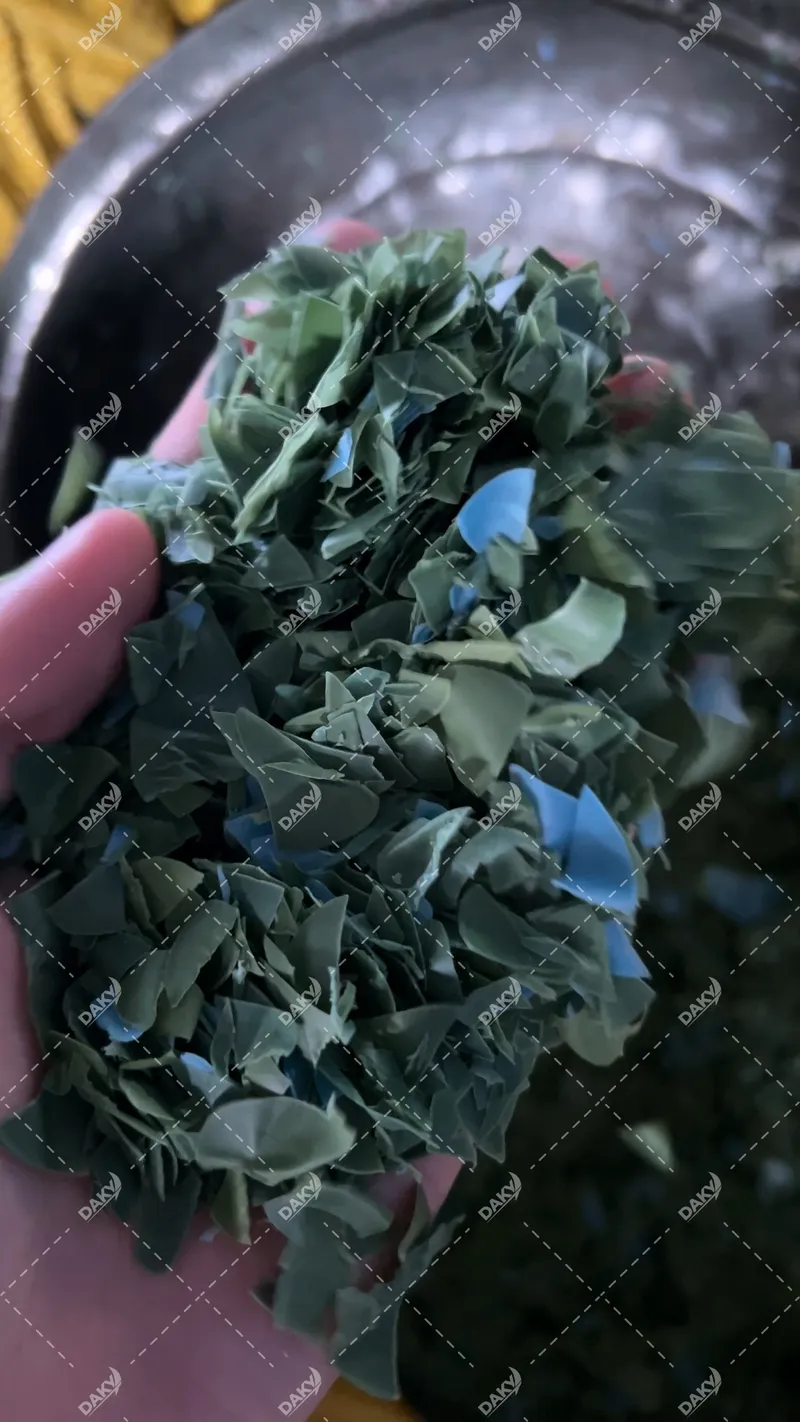
Raw Material
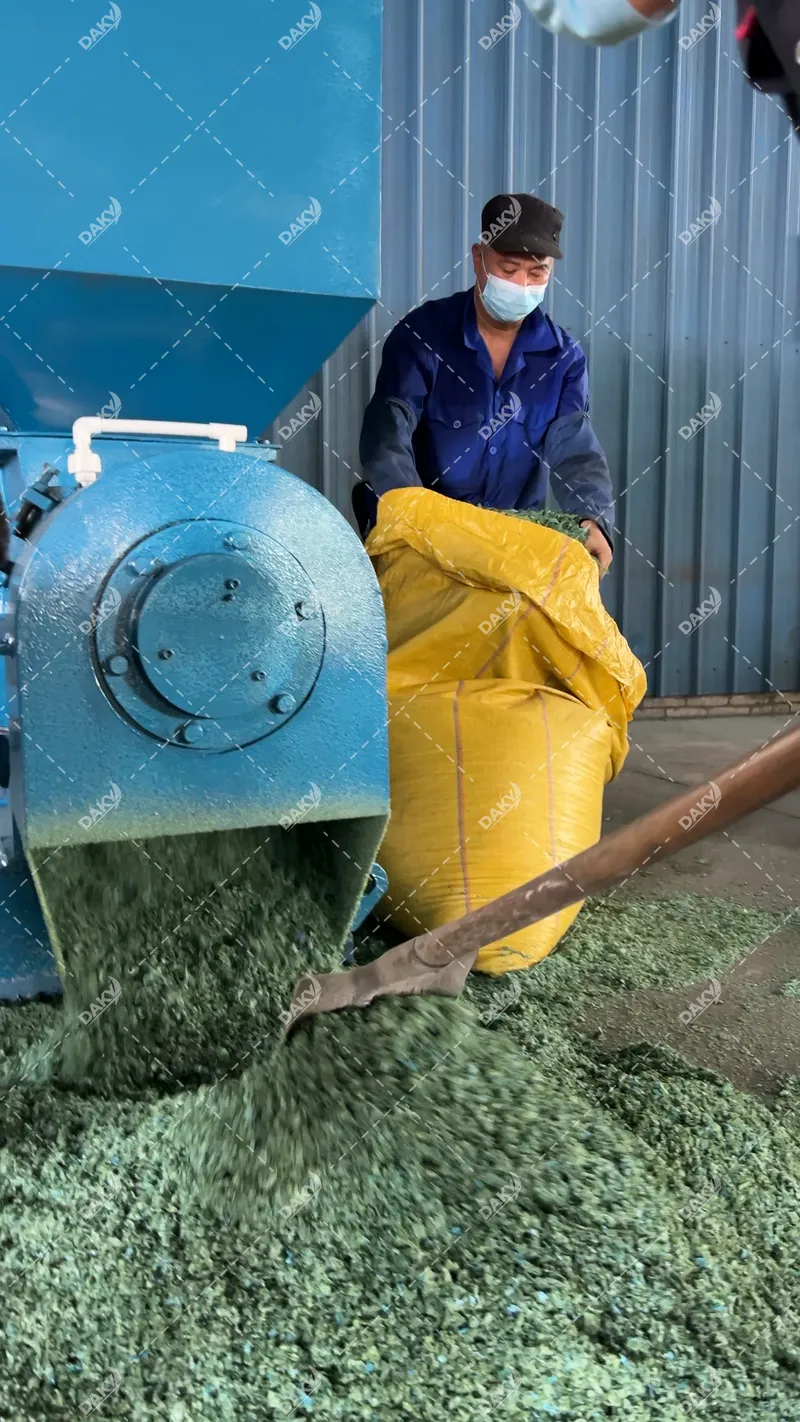
On-Site
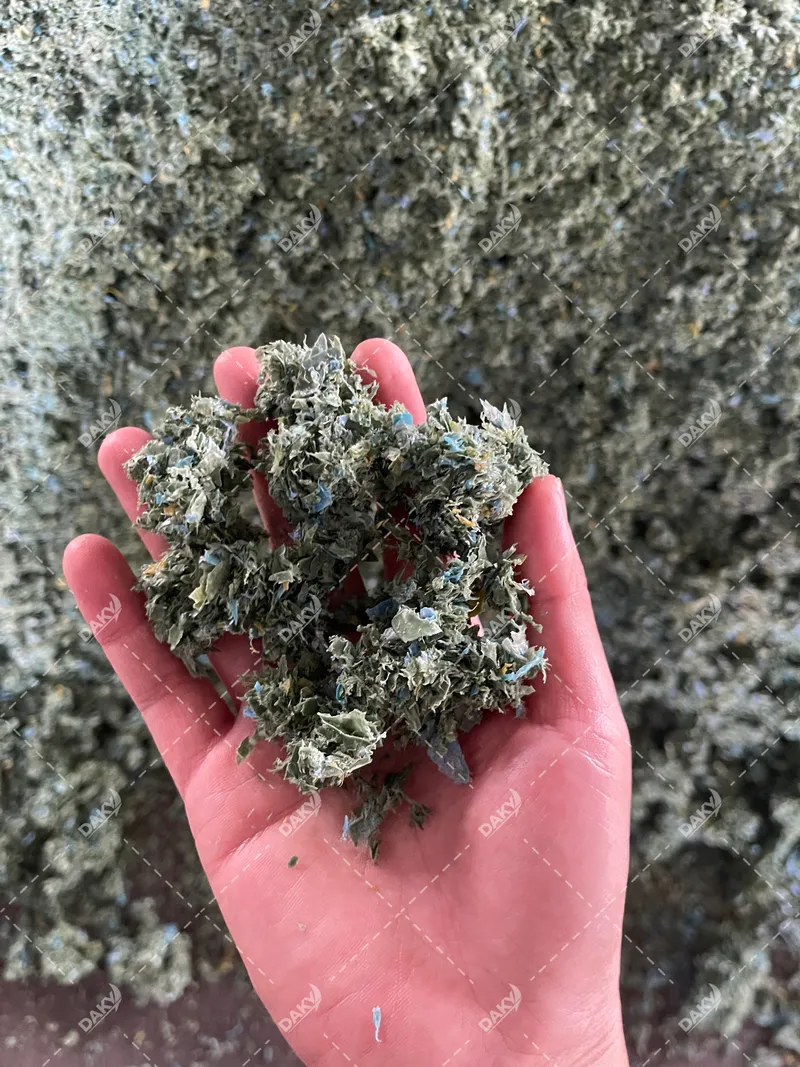
Finished Product
3. Equipment Setup
- Core Equipment: LF-300 Spiral Crusher
- Process Route: PE sheet direct feeding → spiral extrusion & shearing + semi-plasticizing → agglomerate discharge
- Auxiliary System: Reverse control
4. Process Highlights
Semi-Plasticizing of Sheet Material
PE sheet is broken down under spiral extrusion and shearing; frictional heat locally raises the material temperature to a semi-plasticized state, where it naturally agglomerates. The LF-300's spiral structure ensures uniform bite-in of the sheet — the material does not float without feeding like lightweight film, nor does it cause excessive shock loads like rigid chunks.
Volume Reduction & Reuse
After semi-plasticizing, the volume is drastically reduced and density is increased. The output can be directly used as front-end feedstock for recycled pelletizing or returned to the furnace to substitute a portion of virgin material.
5. Result Summary
- Output: Semi-plasticized agglomerates — dense, uniform, with significantly reduced volume
- Pellet Properties: Dry and non-sticky, easy to store and suitable for further processing
- Applications: Recycled PE pelletizing, virgin-material substitute for injection molding, solid waste volume reduction for transport