
Case Overview
Full-process case study: coated aramid fiber waste processed through fiber opening on the ZFS-250. Demonstrates the anti-tangle structure and low-speed fiber-opening process on high-tenacity aramid fibers.
1. Material and Target
| Material Type | Aramid fiber scrap (paint-coated surface) |
|---|---|
| Initial Condition | Aramid woven / laminated scrap with a paint coating on the surface; extremely high tenacity |
| Material Source | Customer-supplied material |
| Key Challenge | Aramid fiber tenacity far exceeds that of glass fiber and carbon fiber — it is one of the most difficult synthetic fibers to cut; the surface paint coating adds further processing complexity |
| Target Output | Fiber opening (breaking down the woven / laminated structure into fibrous form) |
| Downstream Use | Aramid short fiber reinforcement filler, friction materials, recycled feedstock for ballistic composites |
2. Case Visuals
The page uses a three-image structure: raw material, on-site process and finished output.
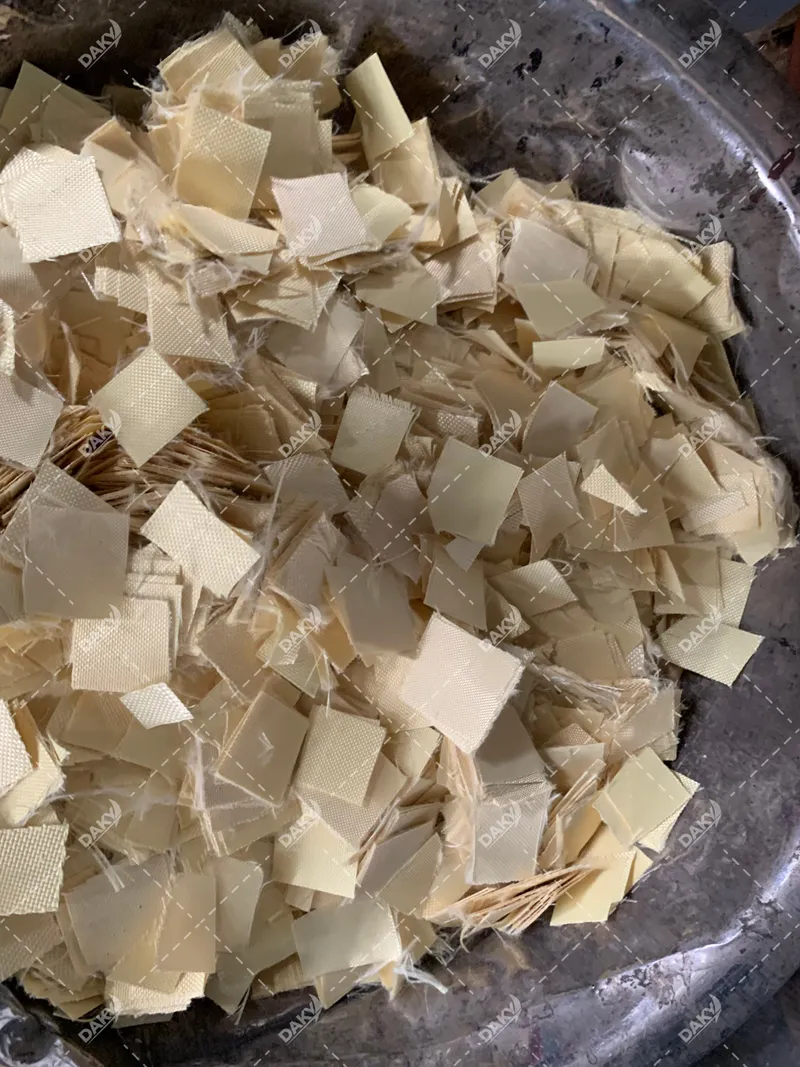
Raw Material
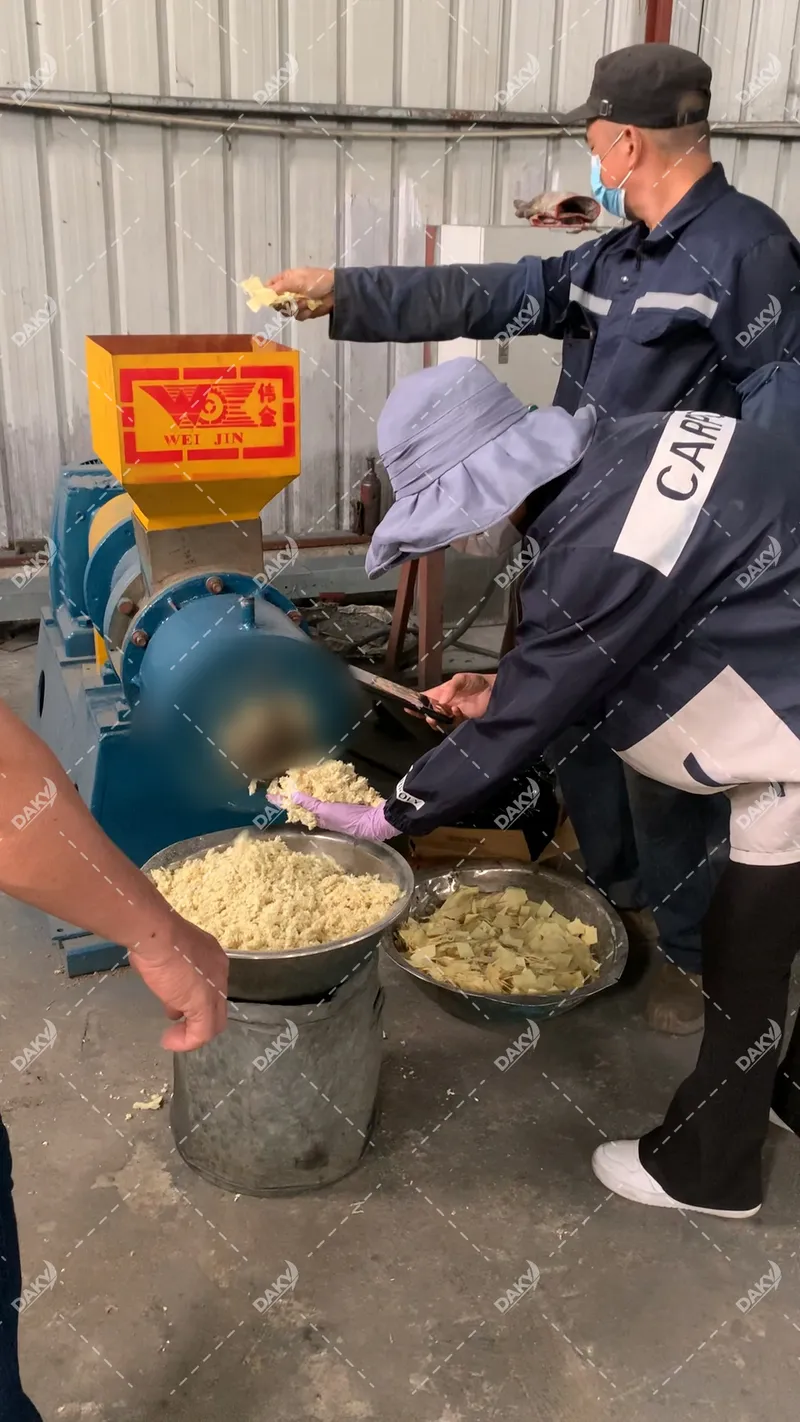
On-Site
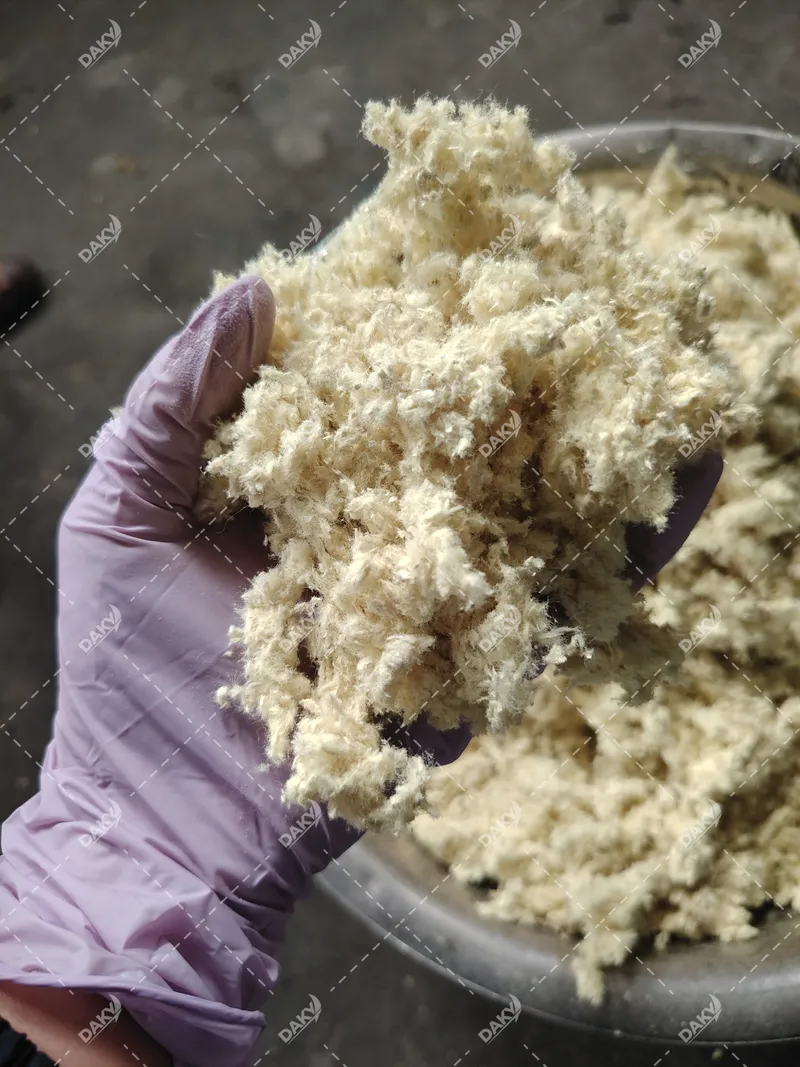
Finished Product
3. Equipment Setup
- Core Equipment: ZFS-250 Grinding Machine
- Process Route: Coated aramid scrap → low-speed fiber opening → fibrous output
- Auxiliary System: Anti-tangle structure + reverse control system
4. Process Highlights
The Unique Challenge of Aramid
Aramid fiber (Kevlar-type) has tensile strength and tenacity far beyond conventional fibers — ordinary crusher blades cannot cut through aramid fibers and instead become entangled, leading to jamming. The ZFS-250's anti-tangle structure is specifically designed for such high-tenacity materials.
Fiber Opening Rather Than Cutting
A low-speed fiber-opening process is used — the aramid woven structure is teased apart into fibrous form through kneading and tearing action, rather than attempting to cut individual fibers directly. The reverse control system automatically reverses to disentangle when winding resistance is encountered.
Adaptability to Coated Material
The surface paint coating detaches and separates as the fibers are opened during the process, without affecting the final fiber quality.
5. Result Summary
- Output: Opened aramid short fibers; woven structure fully broken down; paint coating detached
- Fiber Properties: Aramid fiber length preserved; mechanical properties maintained
- Applications: Friction material reinforcement (brake pads), ballistic composite filler, aramid short fiber reinforced products
6. Related Resources
Carbon Fiber Grinding Machine, ZFS Series
Anti-tangle design, liquid cooling and temperature control
Cord Fabric & Rubber Recycling — Typical Application
Similar high-tenacity fiber processing