
Case Overview
Acceptance trial case study: sticky carbon fiber prepreg waste processed on the ZFS-250 into ~10 mm short fibers via low-speed fiber opening. Demonstrates how the process handles resin-impregnated, tacky carbon fiber scrap.
1. Material and Target
| Material Type | Carbon fiber prepreg scrap (contains uncured resin; tacky surface) |
|---|---|
| Initial Condition | Flaky / chunky prepreg sheets containing epoxy resin; sticky to the touch, soft yet extremely tough |
| Material Source | Customer-supplied material for acceptance testing |
| Key Challenge | Uncured resin softens and sticks to blades / chamber walls when heated by friction; carbon fiber is extremely tough and hard to cut |
| Target Output | Short fibers ~10 mm in length |
| Downstream Use | Intermediate feedstock for recycled prepreg, nonwoven mat, chopped fiber reinforcement filler |
2. Case Visuals
The page uses a three-image structure: raw material, on-site process and finished output.
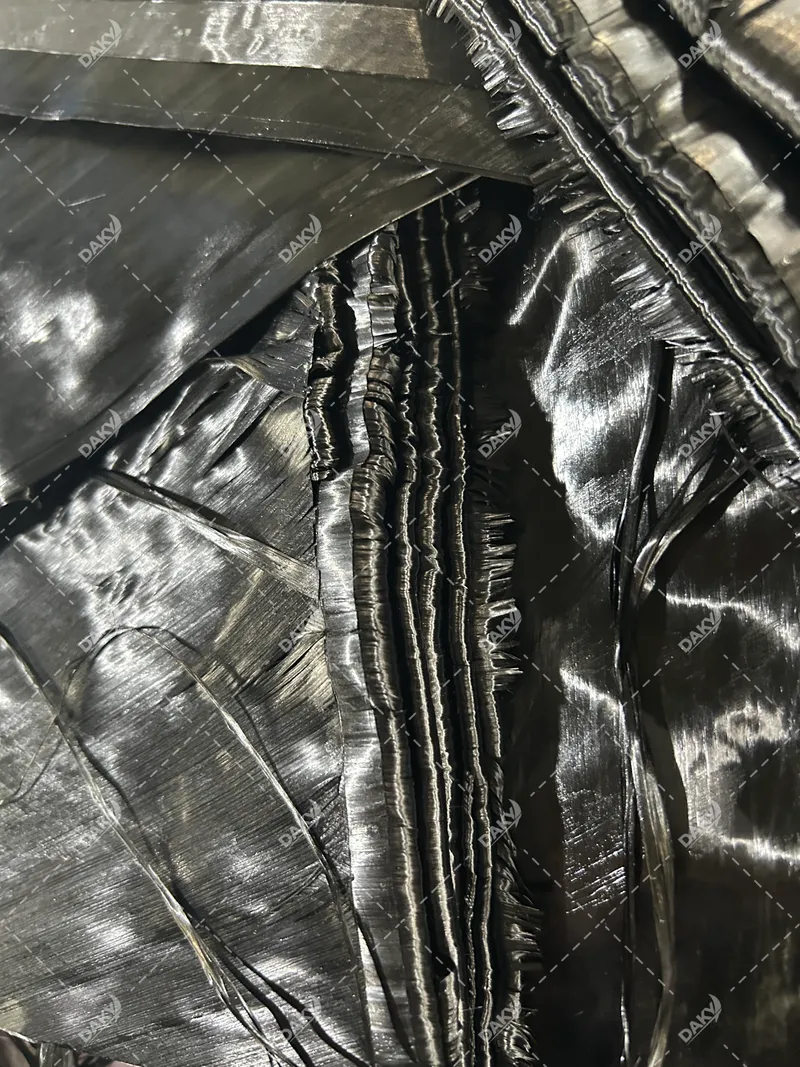
Raw Material
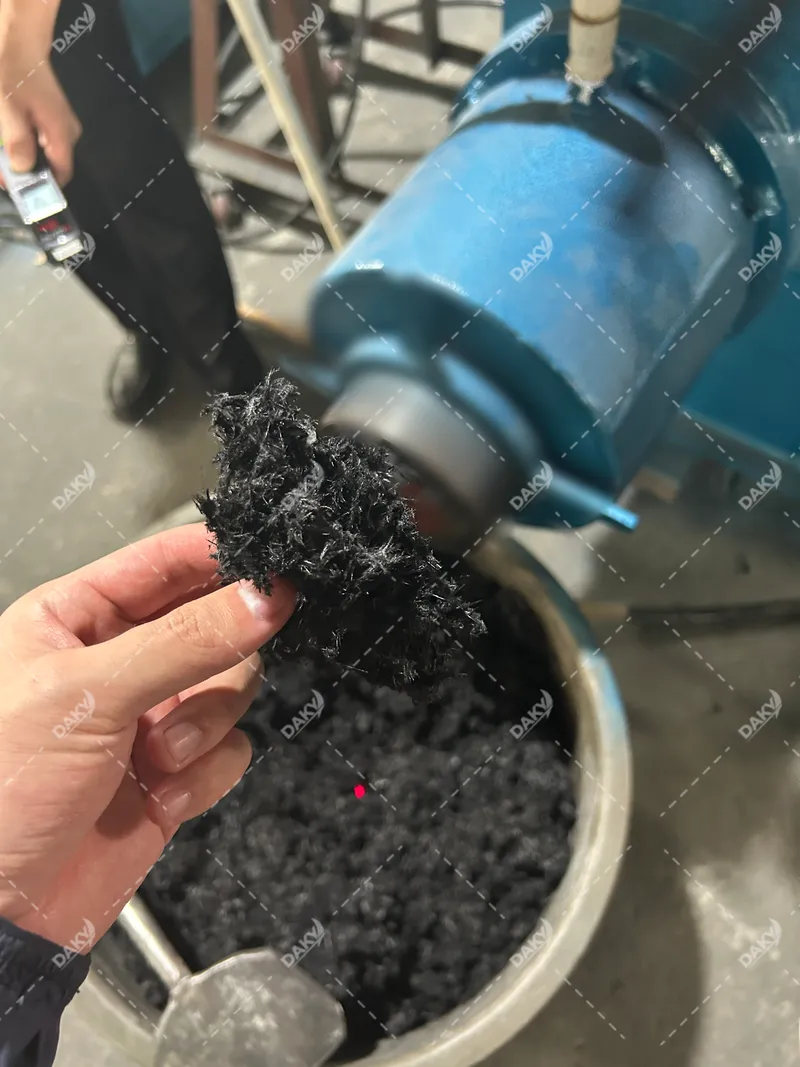
On-Site
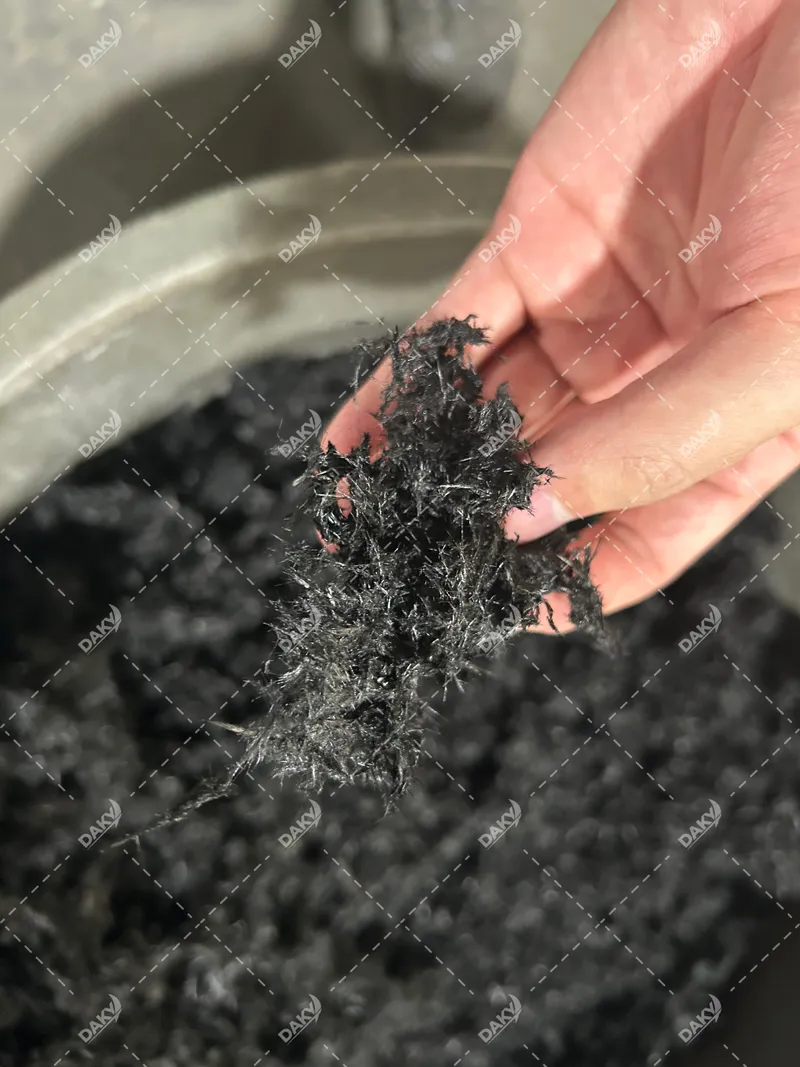
Finished Product
3. Equipment Setup
- Core Equipment: ZFS-250 Carbon Fiber Grinding Machine
- Process Route: Prepreg direct feeding → low-speed fiber opening → screening to ~10 mm short fibers
- Auxiliary System: Liquid cooling and temperature control + anti-tangle structure
4. Process Highlights
Temperature Control for Tacky Material
The prepreg contains uncured epoxy resin; frictional heat during grinding would soften the resin, causing it to adhere to the grinding chamber and tooling. The ZFS-250 is equipped with a liquid cooling and temperature control system that keeps the processing temperature below the resin's softening point, eliminating the sticking problem at the source.
Fiber Opening Instead of Fine Grinding
Since the target is ~10 mm short fibers rather than fine powder, a low-speed fiber-opening process is used — the prepreg sheets are teased apart into individual short fibers through a combination of kneading and shearing, rather than being ground into powder. This preserves the carbon fiber length and mechanical properties, making the output more suitable as an intermediate feedstock for recycled prepreg.
Acceptance Trial Verification
The customer conducted on-site acceptance testing with their own material and confirmed the output meets the ~10 mm short-fiber specification.
5. Result Summary
- Output: Uniform short fibers ~10 mm in length; individual filaments are well separated with no sticky lumps
- Fiber Properties: Carbon fiber length is preserved; the surface resin coating remains intact, suitable for subsequent re-impregnation processes
- Applications: Recycled prepreg production, nonwoven carbon fiber mat, chopped fiber reinforcement filler
6. Related Resources
Carbon Fiber Grinding Machine, ZFS Series
Low-speed, blade-free grinding; liquid cooling and temperature control