
Case Overview
Full-process case study: glass fiber short flock waste ground to uniform 100-mesh fine powder on the ZFS-250 glass fiber grinding machine at low speed. Demonstrates the anti-tangle structure and liquid cooling in processing short-flock glass fiber waste.
1. Material and Target
| Material Type | Glass fiber short flock waste |
|---|---|
| Initial Condition | Fluffy short fibers of varying lengths; prone to becoming airborne and tangling into clumps |
| Material Source | Chopped strands and trimming short flock generated during glass fiber production |
| Key Challenge | Short flock is fluffy and easily airborne — difficult to feed in conventional crushers; fiber clumps wrap around the rotor shaft once inside the grinding chamber |
| Target Mesh | 100 mesh (approx. 150 μm) |
| Downstream Use | Construction material filler & reinforcement, plastic modification filler, friction material additive |
2. Case Visuals
The page uses a three-image structure: raw material, on-site process and finished output.
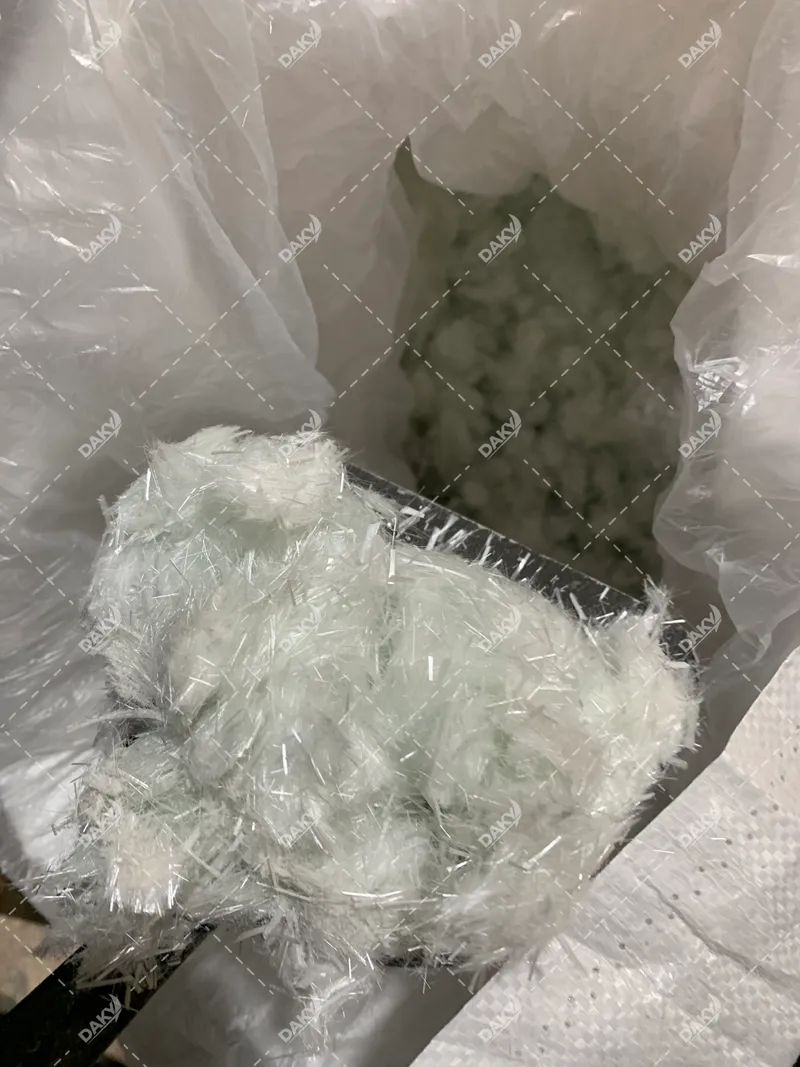
Raw Material
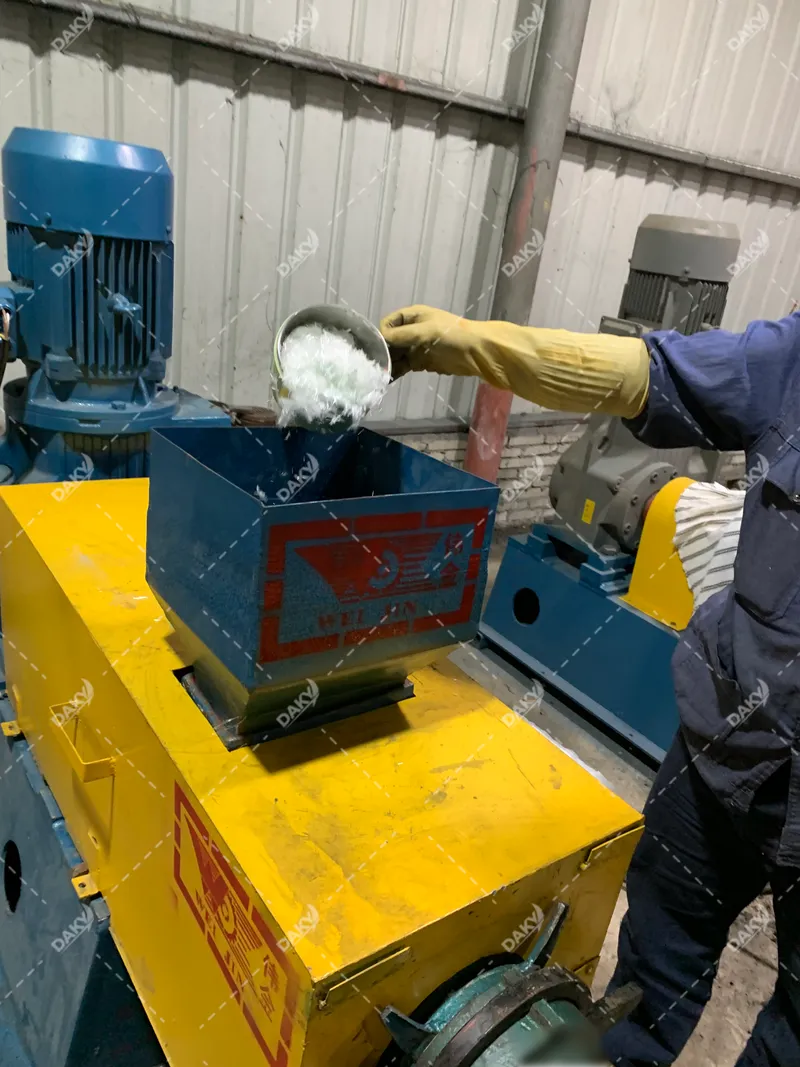
On-Site
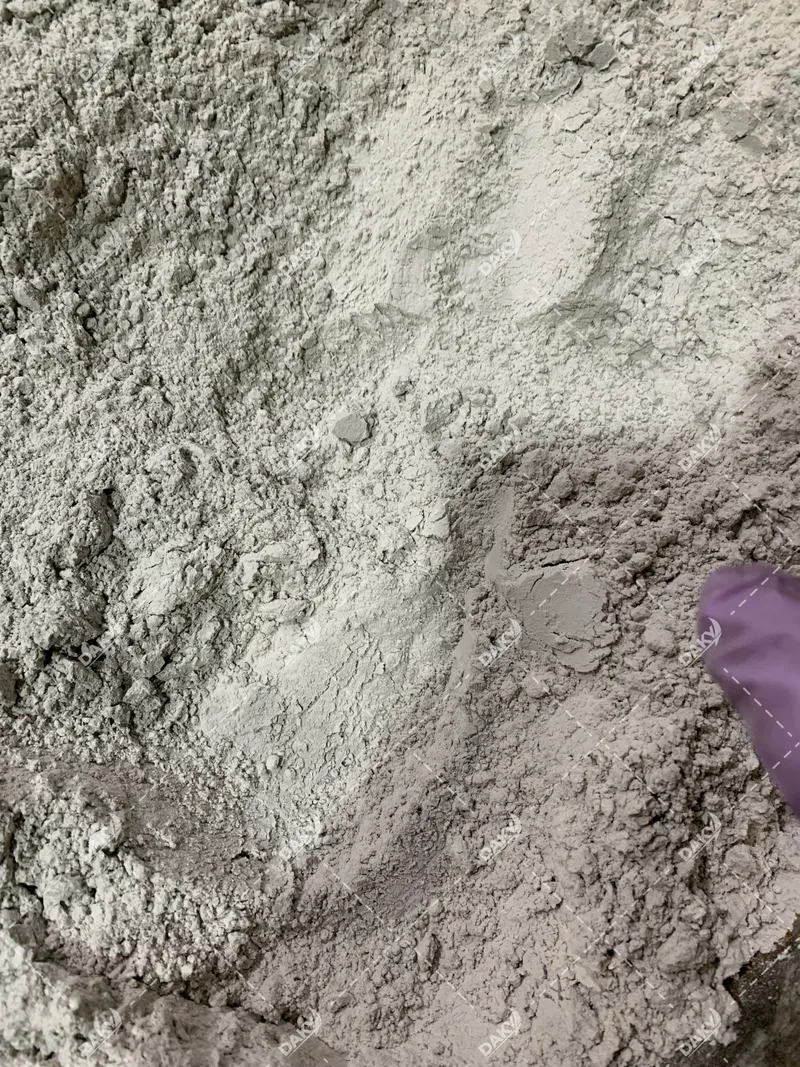
Finished Product
3. Equipment Setup
- Core Equipment: ZFS-250 Glass Fiber Grinding Machine
- Process Route: Short flock direct feeding → low-speed grinding → 100-mesh screened output
- Auxiliary System: Liquid cooling and temperature control + dust collection system (dust-free workshop solution)
4. Process Highlights
Specialized Feeding for Short Flock
Glass fiber short flock is fluffy and lightweight; traditional gravity feeding is inefficient. The ZFS-250's optimized feeding structure for light-loose materials ensures uniform intake of short flock into the grinding chamber without manual compaction assistance.
Anti-Tangle Grinding
Short flock readily clumps and tangles inside the grinding chamber. The ZFS-250's specialized anti-tangle structural design ensures fibers are effectively dispersed upon entering the rotor zone and undergo brittle radial fracture rather than wrapping — a core optimization specifically for glass fiber materials.
Liquid Cooling & Temperature Control
Low-temperature grinding combined with a liquid cooling system controls the grinding chamber temperature, preventing changes to the surface properties of glass fiber powder due to heat build-up, ensuring consistent quality of the 100-mesh output.
Integrated Screening
A multi-layer screening system precisely captures 100-mesh powder; off-spec coarse material is automatically returned to the grinding chamber for further processing, ensuring the output consistently meets the target particle size.
5. Result Summary
- Output: Uniform 100-mesh fine powder; white / off-white, smooth to the touch, no clumps, no residual fibers
- Powder Properties: Low-temperature grinding preserves the original mechanical properties of the glass fiber, making it ideal as a reinforcement filler
- Applications: Gypsum board / cement mortar reinforcement filler, PA/PP plastic modification, friction material additive